Germany continues to face a structural shortage of skilled tradespeople.
Demographic change, the energy transition known as the Energiewende, infrastructure modernization, and expanding industrial and construction activity have created sustained demand for qualified electricians and related craft professionals.
For non-EU workers with recognized vocational qualifications and relevant experience, this shortage opens practical pathways to employment that can reach or exceed €50,000 gross annually, often with employer support for residence permits.
Why Germany Needs Skilled Tradespeople Now
Germany’s labour market shows persistent gaps in the skilled trades, particularly in electrical work, building services, mechanical installation, and related fields.
Official analyses from the Federal Employment Agency and research institutes consistently place electrical installation, energy systems, and related Handwerk occupations among the bottleneck professions.
Vacancies remain open for months in many regions because the number of qualified applicants falls short of demand.
The energy transition drives a large share of this need. Expanding solar installations, heat pumps, electric vehicle charging infrastructure, grid upgrades, and energy-efficient building renovations all require trained electricians and systems technicians. Industrial automation and maintenance in manufacturing hubs add further pressure.
Construction and renovation projects across residential, commercial, and public sectors compound the shortage.
For international candidates this environment improves negotiating power on pay and conditions once qualifications are assessed as equivalent.
Collective agreements in many sectors set solid base rates, and specialists in renewables or industrial systems frequently move into higher bands.
Regions with strong industry or construction activity, such as parts of Bavaria, Baden-Württemberg, and North Rhine-Westphalia, often report stronger demand and competitive compensation.
Visa Pathways Supporting Sponsorship in 2026
Several residence options allow qualified tradespeople to work in Germany with employer involvement.
The Skilled Worker residence permit under Section 18a of the Residence Act is designed for people who hold a vocational qualification of at least two years that has been recognized as equivalent, or in some cases through partial recognition combined with employment.
A concrete job offer is required. Pay must generally align with local market rates or applicable collective agreements.
For first-time applicants aged 45 and over, higher salary thresholds or proof of pension provision may apply.
An experience-based route exists for certain non-regulated professions.
Candidates with at least two years of relevant qualified work experience in the previous five years, a job offer, and a salary meeting the applicable threshold (around the lower shortage-occupation level in recent figures) can qualify without full prior recognition in some cases.
The Opportunity Card (Chancenkarte) provides a points-based job-seeker residence of up to one year for qualified candidates who meet language, qualification, experience, and other criteria.
Once a suitable job is secured, conversion to a work permit is possible.
The EU Blue Card remains relevant mainly for those with academic degrees or specific high-salary specialist roles, with lower thresholds applying to shortage occupations.
Employers can use accelerated procedures in many cases, coordinating recognition and visa steps.
Processing times vary by embassy, completeness of documents, and local authorities, but well-prepared applications with a sponsoring employer typically move faster than purely individual routes.
Family reunification is generally possible once the main applicant holds a qualifying residence permit.
Qualification Recognition and Practical Requirements
Foreign vocational certificates must usually undergo an equivalence assessment (Anerkennung) by the competent Chamber of Crafts (Handwerkskammer) or Chamber of Industry and Commerce.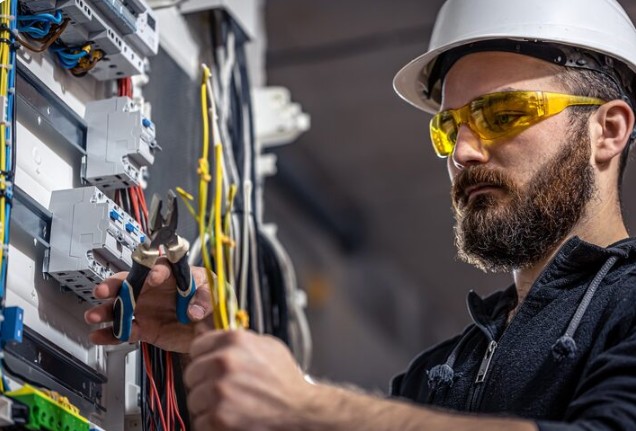
For electricians this commonly involves comparison against the German Elektroniker pathways, especially Energie- und Gebäudetechnik or related specializations.
The process examines training content, duration, and practical experience.
Partial recognition may require compensatory measures such as additional training or examinations.
Language skills matter in daily work. Many employers expect at least B1 German for communication on site, safety instructions, and technical documentation, with B2 preferred for independent work or customer contact.
Some larger industrial employers accept lower levels initially and support further training.
Safety certifications aligned with German standards (including VDE knowledge for electrical work) strengthen applications.
Job search typically involves the official Federal Employment Agency portal, Handwerkskammer listings, company career pages, and specialized recruitment agencies that handle international skilled trades.
Direct applications to medium-sized craft businesses and larger industrial firms both yield results when documentation is complete.
Realistic Salary Expectations for €50K+ Roles
Qualified electricians and comparable tradespeople commonly start in the range of roughly €3,000 to €4,000 gross per month after recognition and entry into regular employment, depending on region, experience, and specialization.
This equates to annual figures that reach or exceed €50,000 for many mid-level and specialized positions once overtime, shift premiums, or higher tariff groups are included.
Industrial automation, renewable energy installation, and Meister-level or supervisory roles frequently sit higher.
Collective agreements and regional differences influence exact figures, with southern and western industrial areas often reporting stronger pay.
Benefits such as paid leave, social insurance contributions, and in some cases accommodation support or language training form part of total compensation packages offered by sponsoring employers.
Electrician & Skilled Trade Jobs in GermanyPaying €50K+ With Visa Sponsorship
See a list of them below:
1. Building and Energy Systems Electrician (Elektroniker für Energie- und Gebäudetechnik)
This role forms the core of residential, commercial, and public building electrical work.
Professionals install, maintain, and troubleshoot wiring, distribution boards, lighting systems, smart-home components, photovoltaic arrays, and energy management systems.
The energy transition has sharply increased demand for specialists who can integrate solar panels, battery storage, heat-pump controls, and EV charging points into existing and new buildings.
Daily tasks include reading technical plans, performing installations according to German standards, testing circuits, diagnosing faults, and ensuring compliance with safety regulations.
Work occurs on construction sites, renovation projects, and service calls. Employers range from small craft firms to larger electrical contractors and energy service companies.
Candidates with solid experience in building electrics, renewable systems, or related installation work are well positioned.
After recognition, salaries for experienced workers regularly enter the €50,000+ annual range, particularly with specialization in photovoltaics or building automation.
Visa sponsorship is common because the occupation ranks among the most acute shortages.
Language at B1 level or higher supports independent site work and client interaction. Career progression can lead to team leadership or further Meister qualification, which opens higher earnings and business opportunities.
2. Industrial and Automation Electrician
Industrial electricians focus on production facilities, manufacturing plants, and automated systems. Responsibilities cover installation, programming support, maintenance, and repair of control systems, motors, sensors, PLC-related equipment, and production line electrics. The role supports Germany’s strong manufacturing base in automotive, machinery, chemicals, and other sectors.
Work environments are often shift-based and require familiarity with industrial safety standards and diagnostic tools.
Demand remains high because factories continuously modernize equipment and face retirement of experienced staff.
Specialists who understand mechatronic interfaces or predictive maintenance systems command particular interest.
Experience in industrial maintenance or automation significantly improves prospects.
Gross annual earnings for qualified workers with several years of practice frequently surpass €50,000, especially with shift allowances or specialized certifications.
Employers in industrial regions actively sponsor skilled candidates under the vocational skilled worker routes once recognition is in place.
Strong technical German or rapid language progress is advantageous for reading manuals and coordinating with engineering teams.
3. Mechatronics Technician
Mechatronics technicians combine mechanical, electrical, and control systems knowledge.
They install, commission, maintain, and optimize complex machines and automated production systems.
Tasks include assembling mechanical components, wiring control cabinets, adjusting sensors and actuators, troubleshooting integrated systems, and performing preventive maintenance.
This hybrid skill set matches the needs of advanced manufacturing and Industry 4.0 environments.
Germany’s machine-building and automotive supply industries generate consistent demand.
Candidates with dual training backgrounds or proven experience across mechanical and electrical domains stand out.
Salaries for experienced mechatronics technicians commonly reach the €50,000+ level, reflecting the scarcity of people who can handle both domains effectively.
Visa pathways mirror those for electricians, with recognition of the vocational qualification and a job offer forming the foundation.
Employers often value practical problem-solving ability and willingness to work in production settings.
Progression can lead to specialist roles in commissioning or technical supervision.
Although focused on heating, ventilation, air conditioning, and sanitary systems, this trade overlaps heavily with electrical work through controls, pumps, sensors, and energy-efficient installations.
Professionals install and service heat pumps, underfloor heating, ventilation units, boilers, and related pipework while integrating smart controls and renewable energy sources.
The push for building energy efficiency and the phase-out of older heating systems have created strong demand.
Work involves both new construction and renovation projects. Experience with heat-pump technology or hybrid systems is especially valuable.
Qualified installers with solid experience often earn in ranges that reach or exceed €50,000 annually once established, particularly in high-demand regions or with specialized renewable certifications.
Recognition of foreign plumbing or HVAC qualifications follows similar chamber procedures.
Sponsorship occurs regularly because the occupation appears consistently on shortage lists.
German language skills support customer-facing service work and safety coordination on sites.
5. Welder and Metal Fabrication Specialist
Welders and related metalworkers support construction, industrial fabrication, pipeline work, and infrastructure projects.
Responsibilities include preparing materials, performing various welding processes according to specified procedures, inspecting joints, and ensuring structural integrity.
Certifications in specific processes and materials increase employability.
Infrastructure investment, manufacturing, and energy projects sustain demand. Specialized welders with experience in high-pressure or critical applications often secure stronger compensation packages.
Annual earnings for skilled welders with recognized qualifications and experience can enter the €50,000 range, particularly with overtime or specialized project work.
Visa sponsorship is available under skilled worker provisions for recognized vocational credentials and job offers meeting market rates.
Practical tests or additional German welding qualifications may form part of the recognition or onboarding process.
6. Renewable Energy and Solar Installation Specialist
This specialized electrician or systems technician role concentrates on photovoltaic systems, battery storage, inverters, and grid connection.
Tasks include site assessment support, mounting and wiring arrays, commissioning systems, troubleshooting performance issues, and ensuring compliance with grid codes and safety standards.
Germany’s renewable expansion creates ongoing need for these skills.
Candidates with prior solar or energy-systems experience adapt readily once local standards are mastered.
Compensation frequently exceeds €50,000 for experienced installers and technicians, reflecting both scarcity and the technical nature of the work.
Employers in the solar and energy sector actively recruit internationally and support visa processes.
Recognition focuses on electrical or energy-related vocational training, supplemented by product-specific training after arrival.
Practical Steps to Pursue These Opportunities
Begin by gathering certificates, transcripts, employment references, and any existing licenses.
Initiate the recognition process early through the relevant chamber or the official recognition portal.
Improve German language skills to at least B1 and ideally B2.
Search for vacancies using German occupational titles and apply directly, highlighting equivalent experience and willingness to complete any required compensatory measures.
Once a job offer is secured, the employer can support the visa application.
Prepare for embassy interviews or document checks by ensuring translations and apostilles are complete where required.
Upon arrival, register residence, obtain health insurance, and complete any remaining recognition steps if using a partnership arrangement.
Long-term prospects include permanent residence after a qualifying period of employment and language progress, family reunification, and further professional development through Meister training or specialized certifications.
FAQs
How Does the Qualification Recognition Process Work for Foreign Electricians?
The competent regional Handwerkskammer or IHK compares the foreign training curriculum, duration, and practical experience against the corresponding German vocational profile.
Applicants submit diplomas, transcripts, work references, and sometimes a detailed description of training content.
Processing can take several weeks to a few months.
Partial recognition may require additional courses or exams.
Starting the process before or in parallel with job applications reduces overall timelines.
What Level of German Language Is Typically Required?
Most employers expect conversational workplace German at B1 for basic communication and safety.
Independent work, reading technical documents, and client contact usually call for B2.
Some industrial settings accept lower levels initially if technical skills are strong and language training is supported.
Investing in language courses before and after arrival improves both job prospects and daily life.
Can Family Members Accompany or Join a Sponsored Worker?
Yes. Once the main applicant holds a qualifying skilled worker residence permit, spouses and minor children can generally apply for family reunification visas.
Spouses often receive work authorization as well. Proof of adequate housing and financial means forms part of the application.
How Long Does the Overall Process Usually Take?
From recognition initiation through job offer and visa issuance, well-prepared cases commonly take three to six months, though individual factors such as embassy workload, document completeness, and employer processing speed cause variation.
Accelerated employer procedures can shorten parts of the timeline.
Are There Opportunities Outside the Major Cities?
Yes. Demand exists across many regions, including smaller towns and rural areas where local craft businesses struggle to fill positions.
Housing costs are often lower outside major metropolitan centres, improving net financial outcomes.
Industrial clusters and construction activity create openings beyond the largest cities.
What Happens After Several Years of Work?
Qualified skilled workers can apply for permanent residence(Niederlassungserlaubnis) after meeting residence duration, language, and contribution requirements.
Pathways to citizenship exist after longer periods of lawful residence. Continuous employment and language progress support these steps.